
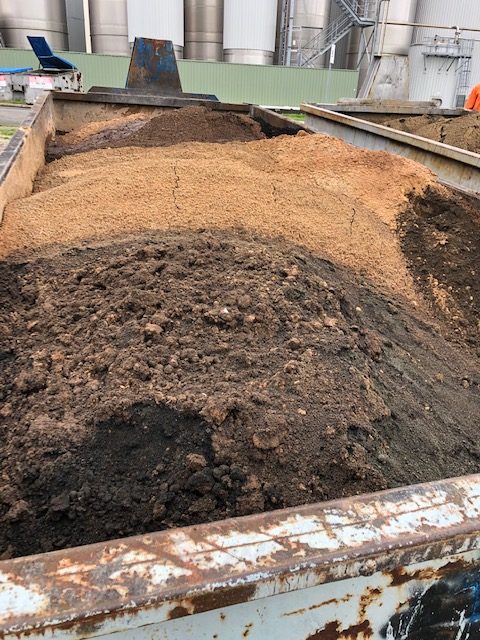
Bentonite is a clay mineral that arises as a by-product of the edible oil manufacturing process, and its supply sits within Benzoil's waste stream management services. GrainOut, the food and beverage by-product specialist within the Benzoil group, supplies bentonite to the Australian stockfeed industry. Originally used as a pH buffer to counteract lactic acid build-up from cereal-based rations, the role of bentonite in animal nutrition has expanded considerably as research has clarified its capacity to bind mycotoxins in the gastrointestinal tract of livestock.
Why Cereals Carry Mycotoxin Risk
Cereals including wheat, maize, barley, rye, and oats form the backbone of most commercial livestock diets in Australia. These crops are susceptible to contamination by fungi both in the paddock and during storage. Warm and humid conditions, which are common across much of Australia's grain-growing regions, promote fungal growth and the subsequent production of mycotoxins. A recent Australian survey found that 71 percent of wheat samples were contaminated with deoxynivalenol (DON), illustrating that mycotoxin risk is not confined to tropical import markets; it is a domestic issue for Australian stockfeed producers.
Mycotoxins have adverse effects on both animals and humans at low concentrations. Aflatoxin B1 (AFB1) is classified by the International Agency for Research on Cancer (IARC) in the highest toxicity group, Group 1. In Queensland, the Biosecurity Regulation 2016 sets maximum permitted levels of aflatoxin B1 in dairy animal feed, and broader national controls apply to other classes of livestock. Climate change is expected to intensify the challenge, as rising average temperatures expand the geographic range and seasonal window for Aspergillus and Fusarium contamination of stored grain.
In cattle feedlots and commercial poultry and pig operations, the flow-on effects of mycotoxin-contaminated rations include reduced feed intake, impaired protein digestibility, weakened immune function, and poor growth rates. Where aflatoxin is present in dairy feed, it carries over into milk as aflatoxin M1, creating a direct food safety exposure pathway for consumers. Queensland's Code of Practice for feed for food-producing animals specifically restricts aflatoxin B1 levels in feeds destined for dairy cattle.
How Bentonite Works as a Mycotoxin Binder
Bentonite clay binds aflatoxins in the digestive tract by forming a stable mycotoxin-bentonite complex that resists gastrointestinal absorption. In vitro studies have recorded aflatoxin B1 adsorption rates of 90 to 95 percent at pH 5. In animal trials, dietary inclusion of bentonite at 3.7 and 7.5 grams per kilogram of feed has been shown to offset the adverse effects of 0.1 and 0.2 mg/kg of aflatoxin B1 in the ration.
Bentonite has demonstrated superior mycotoxin binding performance compared with many commercial synthetic binder products. It also reduces the carry-over of aflatoxin B1 from feed into milk (as aflatoxin M1) by up to 26 percent, a significant benefit for dairy operations trying to meet food safety requirements. Additional documented effects include improved egg production in laying hens and a degree of binding activity against ochratoxin A and other mycotoxins beyond the aflatoxin family.
From a safety standpoint, bentonite is not genotoxic and is not absorbed across the gut wall, so there is no direct toxicological risk to the animal. This profile has led to its evaluation and approval as a feed additive by the European Food Safety Authority (EFSA), which has set guidance on effective and safe inclusion levels. In the Australian context, the APVMA's framework for feed additives and the AS 5812-2023 stockfeed manufacturing standard provide the relevant quality assurance requirements for bentonite use in commercial feed operations.
The global feed mycotoxin binders market is growing at a compound annual growth rate of approximately 10.6 percent, with bentonite holding around 33 percent product share, reflecting its position as the default first-line mycotoxin management tool in commercial feed operations due to broad aflatoxin binding efficacy at low cost per tonne of feed.
Challenges in Introducing Bentonite to Livestock Diets
On-farm incorporation
Feedlot and dairy operations follow carefully balanced nutritional programmes, and any ration change requires a measured transition to avoid disrupting rumen function or gut health. Introducing bentonite too quickly, or at levels above the established effective range, can affect feed intake and digesta flow. Changes to diet composition at commercial scale also require documentation and sign-off from consulting nutritionists. For this reason, GrainOut, through Benzoil's surplus management network, recommends that producers interested in incorporating bentonite begin with a technical consultation and a controlled trial period.
Supply chain and format considerations
The volume, packaging format, and delivery logistics for bentonite can vary significantly depending on site size and location. GrainOut can supply bentonite in bulk, bulka bags, or 25 kg bags to suit different operations across metropolitan and regional Australia, as part of Benzoil's resource recovery and by-product redistribution model. Geographic spread and varying volume requirements make distribution coordination important, and GrainOut works with producers to match supply format to operational need.
Product approval for feed manufacturers
Commercial feed manufacturers transitioning from proprietary synthetic binders to bentonite face a product approval process that includes technical trials, data review, and in some cases reformulation of existing compound feed products. The timeline for this process should not be underestimated. GrainOut provides samples for trial use and technical support to assist manufacturers. Producers can also request a quote for bulk or bagged bentonite supply. in gathering the data needed for their internal approval processes.
Key Takeaways
- Bentonite is a by-product of edible oil processing and functions as both a pH buffer and an aflatoxin binder in livestock feed.
- Mycotoxin contamination of Australian grain, including DON in wheat, is a genuine domestic risk for stockfeed operators, not just an import-related concern.
- Bentonite has shown aflatoxin B1 adsorption rates of 90 to 95 percent in vitro and outperforms many commercial synthetic binder products.
- It is not genotoxic and is not absorbed across the gut wall, making it safe for animals at recommended inclusion levels.
- Regulatory frameworks in Australia, including QLD's Biosecurity Regulation 2016 and the APVMA's feed additive guidelines, set the context for bentonite use in commercial operations.
- Transitioning to bentonite takes time due to strict feedlot diet management requirements and feed manufacturer approval processes, but the cost-effectiveness and performance advantages make it worthwhile.
Frequently Asked Questions
What is bentonite and where does it come from?
Bentonite is a clay mineral that arises as a by-product of the edible oil manufacturing process. GrainOut, part of the Benzoil group, supplies bentonite to the Australian stockfeed industry for use as a pH buffer and mycotoxin binder in livestock diets.
How does bentonite help protect livestock from mycotoxins?
Bentonite binds aflatoxins and other mycotoxins in the gastrointestinal tract of livestock, preventing absorption into the bloodstream. Research shows bentonite can adsorb 90 to 95 percent of aflatoxin B1 in vitro, and it has been shown to reduce the carry-over of aflatoxin M1 into milk by up to 26 percent in dairy cows.
Is mycotoxin contamination a problem in Australian grain?
Yes. A recent Australian survey found that 71 percent of wheat samples were contaminated with deoxynivalenol (DON), confirming that mycotoxin risk is a domestic issue for Australian stockfeed producers, not just a concern for imported grain. Warm and humid storage conditions across many Australian regions promote fungal growth and mycotoxin production.
Is bentonite safe for use in livestock feed in Australia?
Bentonite is not genotoxic and is not absorbed across the gut wall, making it safe for animals at recommended inclusion levels. The European Food Safety Authority (EFSA) has evaluated and approved it as a feed additive. In Australia, its use is governed by APVMA feed additive guidelines and the AS 5812-2023 stockfeed manufacturing standard.
In what formats does GrainOut supply bentonite?
GrainOut can supply bentonite in bulk quantities, bulka bags, or 25 kg bags to suit operations ranging from small mixed-livestock properties to large commercial feedlots and poultry operations across metropolitan and regional Australia.
Request Bentonite Samples or a Technical Consultation
GrainOut can assist with sample requests, technical queries, and trial planning for bentonite incorporation into your animal feed programme. Contact us here, call 0497 645 008, or email info@benzoil.com.au.


