
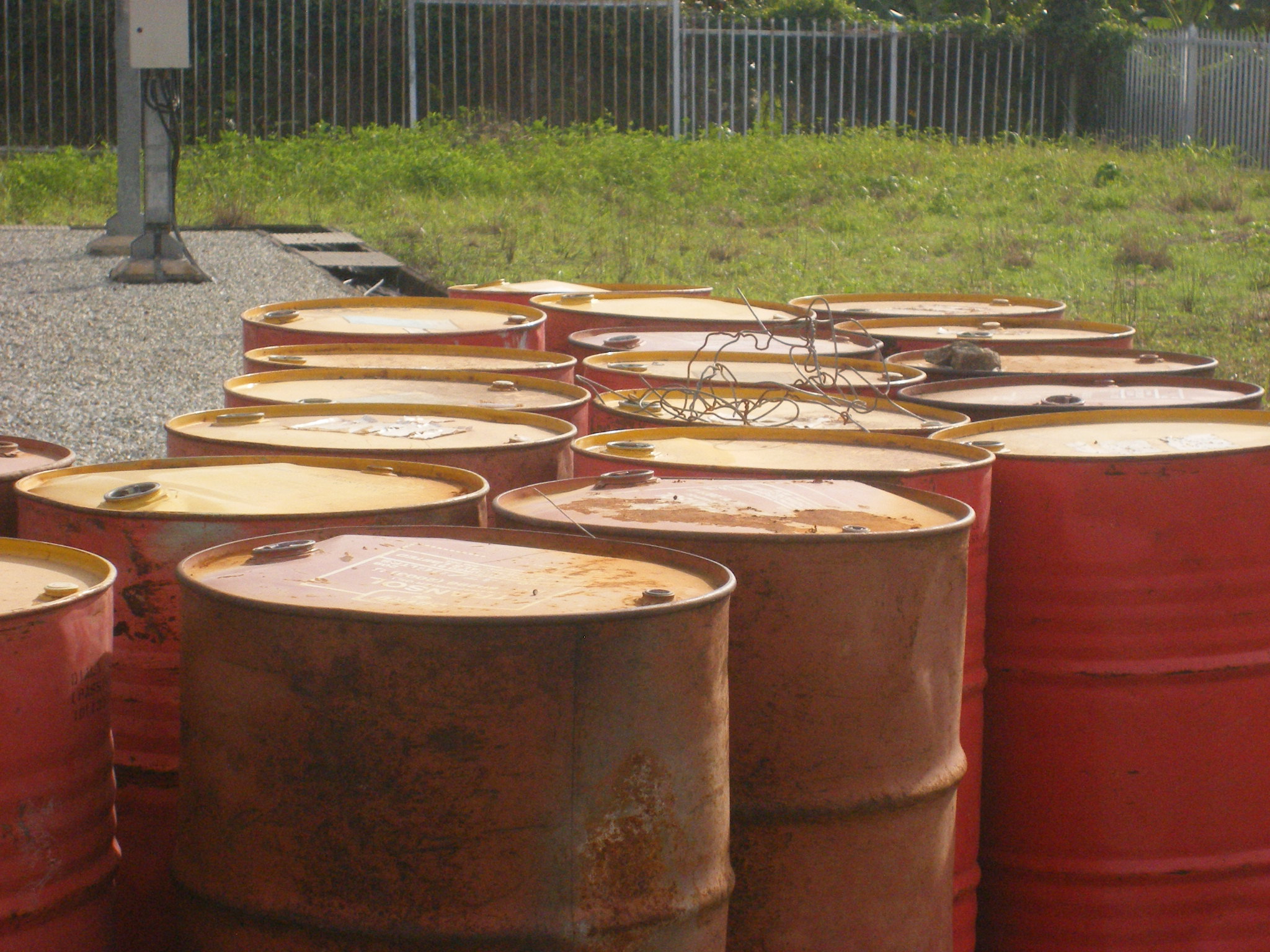
Waste petrol is one of the most frequently handled liquid waste streams in commercial and industrial operations across Australia. As a hazardous, flammable liquid, it requires careful classification, storage, transport, and disposal by licenced operators. This article covers when petrol becomes a waste product that must be removed, why its safe disposal cannot be handled through normal waste oil channels, and what commercial and industrial operators can expect from a professional flammable liquid recovery service.
When Does Petrol Become Waste?
Petrol has a useful life, and several circumstances render it unsuitable for continued use:
- Age and degradation. Petrol stored in a sealed container at approximately 20 degrees Celsius has a shelf life of around six months. In warmer storage conditions, degradation occurs more rapidly. Beyond these timeframes, volatile components evaporate, oxidation products form, and the fuel loses combustion quality. Stale petrol should not be used in engines or equipment.
- Contamination by another liquid. Petrol that has come into contact with water, diesel, or other fluids must be disposed of. Contamination can cause dangerous chemical reactions, degrade combustion performance, and damage engine fuel systems.
- Cross-contamination of another substance. If petrol has entered a water source, oil storage vessel, or any other substance, the entire affected volume requires professional hazardous waste disposal for the same reasons outlined above.
Why Petrol Cannot Go Through Standard Waste Oil Collection
Petrol is classified as a Class 3 Flammable Liquid under the Australian Dangerous Goods (ADG) Code, which governs the classification, packaging, labelling, and transport of hazardous materials nationally. Its flashpoint is low, making it easy to ignite under ordinary ambient conditions. This creates a distinct handling risk that separates it from standard waste oils such as engine oil, hydraulic fluid, or transformer oil.
Petrol has a strong, distinctive odour that waste oil collectors can detect immediately. Standard waste oil collection operators are not equipped or licensed to handle petrol-contaminated streams, and most will refuse to collect any oil they suspect contains petrol traces. Attempting to blend petrol into a standard waste oil drum is also a safety hazard and a regulatory breach. Flammable liquid waste streams require collection and transport by operators holding the appropriate EPA licence and dangerous goods transport accreditation under state and federal frameworks.
Under Australian hazardous waste disposal law, including the requirements of the Basel Convention as implemented through Commonwealth legislation, waste must be managed as close as practicable to where it is generated, and disposal pathways must comply with state EPA requirements. Improper disposal of petrol, including illegal dumping or unauthorised burning, can attract significant penalties under state environmental protection legislation.
Best Practice for Managing Waste Petrol on Site
Before a licenced collection contractor arrives, commercial and industrial operators should take the following steps:
- Store waste petrol in approved, labelled containers with secure lids, away from ignition sources, drains, and waterways.
- Ensure secondary containment is in place around the storage area, capable of holding 110 percent of the maximum container volume.
- Keep waste petrol segregated from incompatible waste streams such as oxidisers and corrosives, consistent with ADG Code segregation requirements.
- Retain Safety Data Sheets (SDS) for the waste stream. Section 13 of the SDS provides disposal guidance; Section 14 covers transport classification.
- Document volumes and arrange collection through a licenced liquid waste contractor before the storage period exceeds safe limits.
Benzoil's Flammable Liquid Recovery Service
Benzoil assists commercial and industrial clients across Australia with the safe disposal of waste petrol and other flammable liquid streams. We work with aviation and agriculture operators, automotive workshops, mining and processing sites, and industrial facilities on waste recovery and waste reduction programmes.
Our network of service providers holds the EPA licences and dangerous goods transport accreditations required for the collection and transport of liquid waste. We handle hydraulic oil, aviation fuel, garage and workshop oil, synthetic oil, and transformer oil alongside waste petrol through our used oil and fuel collection service, and we assess each stream individually to identify the best processing, blending, reuse, or disposal outcome. Where a flammable liquid has residual value, we prioritise recovery pathways over simple disposal, which reduces cost and environmental impact for the client.
Recovery Options: From Disposal to Resource
Not all waste petrol ends up being destroyed. Where a flammable liquid waste stream is relatively uncontaminated and present in sufficient volume, it may have residual value as a blending component or process fuel. Benzoil's approach is to assess each waste stream for its best-case outcome before defaulting to disposal. This is consistent with the waste hierarchy principle embedded in Australian state-level waste legislation, which calls for reduction, reuse, and resource recovery ahead of treatment and disposal.
For commercial and industrial operators generating regular volumes of waste petrol or other flammable liquids, setting up a formal waste management collection arrangement provides certainty around compliance and cost. Rather than managing ad hoc accumulations of hazardous liquid waste in improvised storage, a scheduled collection programme ensures that volumes are kept within safe limits, containers are properly labelled and maintained, and documentation for regulatory purposes is current. Benzoil can assist clients in designing these arrangements to suit their operational schedules and volumes.
Beyond petrol, Benzoil also handles other Class 3 flammable liquid streams including waste solvents, old aviation fuel, contaminated diesel, covered under our fuel oils and recovery capabilities, and industrial cleaning fluids. These streams each have specific handling requirements. Where contaminated or expired chemical products are also involved, Benzoil's expired and excess chemicals service can assist. Matching the correct disposal or recovery pathway to the specific material is part of the service Benzoil provides through its network of licensed contractors.
Key Takeaways
- Petrol becomes a waste product when it is stale, contaminated by another liquid, or has contaminated another substance.
- Waste petrol is a Class 3 Flammable Liquid under the ADG Code and requires collection and transport by licensed operators.
- Standard waste oil collectors are not equipped to handle petrol-contaminated streams and will refuse collection.
- On-site storage of waste petrol must comply with ADG Code requirements including secondary containment and segregation from incompatible materials.
- Benzoil connects commercial and industrial clients with licensed flammable liquid waste contractors and assesses streams for recovery, blending, or compliant disposal.
- Australian state EPA frameworks and Commonwealth dangerous goods legislation govern every stage of the waste petrol management process.
Frequently Asked Questions
When does petrol become a waste product that needs professional disposal?
Petrol becomes waste when it is stale or beyond its six-month shelf life in sealed storage, when it has been contaminated by another liquid such as water or diesel, or when it has contaminated another substance. In all these cases, the affected volume must be professionally removed by a licensed operator.
Can I dispose of waste petrol through a standard waste oil collector in Australia?
No. Standard waste oil collectors are not licensed or equipped to handle petrol-contaminated streams. Petrol has a distinctive smell that collectors will detect, and they will refuse to take away oil that contains petrol traces. Waste petrol must be managed by operators holding the appropriate dangerous goods transport accreditation and EPA licence.
What class of dangerous goods is waste petrol in Australia?
Waste petrol is classified as a Class 3 Flammable Liquid under the Australian Dangerous Goods (ADG) Code, which governs its classification, packaging, labelling, and transport nationally. This classification requires licenced operators for all collection and transport activities.
What are the on-site storage requirements for waste petrol?
Waste petrol must be stored in designated, appropriately labelled containers with secondary containment to capture any spills. Containers must be segregated from incompatible materials, away from ignition sources, and stored in well-ventilated areas. ADG Code and relevant state EPA regulations prescribe the specific requirements, which vary depending on the volume stored.
Can waste petrol be recovered and reused rather than destroyed?
In some cases, yes. Where a flammable liquid waste stream is relatively uncontaminated and present in sufficient volume, it may have residual value as a blending component or process fuel. Benzoil assesses each waste stream individually to identify whether a recovery pathway is viable before defaulting to disposal, consistent with the waste hierarchy principle in Australian legislation.
Get in Touch for Commercial and Industrial Petrol Waste Solutions
Benzoil provides reliable, compliant flammable liquid recovery services for businesses across Australia. To discuss your waste petrol or other hazardous liquid waste needs, contact us here, call 0497 645 008, or email info@benzoil.com.au.


