
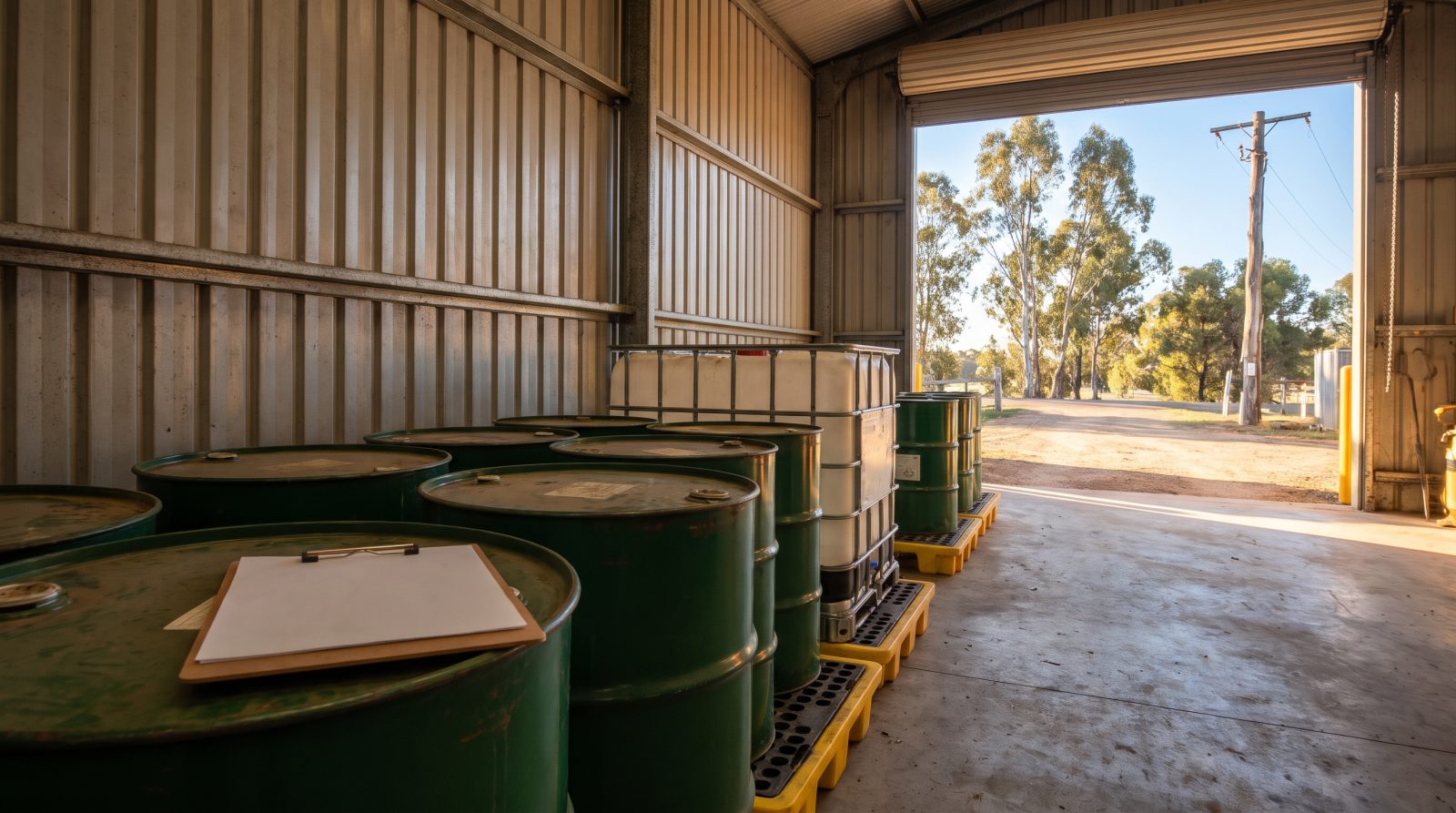
This guide is for site, environmental and procurement managers who send hazardous waste off site in Australia. Before any hazardous waste disposal, the waste must be identified by its waste code, and every move from your site to the receiving facility must be documented through the tracking process each state sets. In Victoria that is EPA Victoria's Waste Tracker, in New South Wales it is the NSW EPA's consignment authorisation and transport certificate process, and in Queensland it is the waste tracking scheme under the Environmental Protection Regulation 2019.
Key takeaways
- In all three states, the business that produces the waste carries tracking duties, not only the transporter.
- Victorian producers of reportable priority waste must create a Waste Tracker record before the waste is transported.
- In NSW, a consignment authorisation must be issued before trackable waste moves, and a transport certificate travels with each load.
- Queensland generators must give the transporter the prescribed information, submit it to the department and keep records for at least 5 years.
- In Queensland, it is an offence for a generator to hand waste to a transporter that is not licensed to carry regulated waste.
What does tracking mean for hazardous waste disposal?
Hazardous waste tracking records the movement of a load from the business that produced it, through the transporter, to the receiving facility. The NSW EPA says tracking helps stamp out illegal dumping, prevents waste going to the wrong facility and stops unfair competition. Queensland describes its scheme as a way to make sure only facilities with adequate treatment and disposal methods receive the waste, and to set up a system of accountability.
Victoria tracks reportable priority waste. NSW tracks trackable waste listed in Schedule 1 of its Waste Regulation. Queensland tracks trackable waste within its regulated waste framework. In every state you need the waste code: NSW requires the consignor to characterise the waste to find it, and Victorian and Queensland records must include it.
What paperwork does Victoria require?
In Victoria, every change of hands for reportable priority waste must be notified to EPA Victoria, and Waste Tracker is the system used to do it.
According to EPA Victoria's Waste Tracker page, this includes each handover from producer to transporter and from transporter to receiver. The notification must include the information listed in Schedule 7 of the Environment Protection Regulations 2021.
The producer's role
Waste producers must create a waste record before the waste is transported. An accredited consigner or the transporter can create the record for the producer, but the producer must keep a copy of the completed record and is accountable for the information entered on its behalf. EPA Victoria's guidance for waste producers lists what each record needs, including:
- the waste code and waste form
- package type (bulk or other) and number of packages
- the intended treatment option, such as reuse or recycling
- the quantity to collect
- the dangerous goods classification and contaminant information, where these apply
- the industry type, the pick-up location and the intended transport dates.
The producer selects a transporter that is able to carry the waste code specified.
How does hazardous waste tracking work in NSW?
In NSW, hazardous waste listed in Schedule 1 of the Protection of the Environment Operations (Waste) Regulation 2014 must be tracked when it is transported into, within or out of the state.
The NSW EPA's tracking guidance sets out the steps. The waste consignor (the producer or its authorised agent) characterises the waste and checks whether it must be tracked. A consignment authorisation is then obtained from the receiving facility or the EPA. It covers a specific type of waste for up to one year, and it must be issued before the waste can be transported. A transport certificate is created for each load. It records the pick-up date, the intended delivery date and the date the facility accepted or rejected the waste, and it must accompany the load.
The waste producer, any authorised agent, the transporter and the receiving facility manager are all responsible for proper tracking. The requirements are the same whether or not a business holds an environment protection licence. The EPA's Integrated Waste Tracking Solution has replaced its earlier online tracking systems.
What must a Queensland waste generator do?
A Queensland waste generator must give the transporter the prescribed information when handing over trackable waste, submit that information to the department and keep records.
Business Queensland explains that, under the Environmental Protection Regulation 2019, generators, transporters and receivers all have obligations, and the receiving facility must be appropriately licensed. Its generator obligations page says information can be submitted through an Online Services account, by bulk data upload, or on paper waste transport certificates. Records must be kept for at least 5 years. It is an offence for a generator to hand the waste to a transporter that is not licensed to carry regulated waste.
How do the three states compare?
Each state uses a different record, but all three place duties on the producer.
| State | Regulator | Tracking record | Key duty for the producer |
|---|---|---|---|
| Victoria | EPA Victoria | Waste Tracker record | Create the record before transport and keep a copy |
| New South Wales | NSW EPA | Consignment authorisation and transport certificate | Characterise the waste and hold a consignment authorisation before it moves |
| Queensland | Department of the Environment, Tourism, Science and Innovation | Online Services entry or waste transport certificate | Give and submit the prescribed information, keep records for 5 years |
Waste that crosses a state border adds another layer. The NSW EPA notes that consignment authorisations for waste moving from NSW to another state must be obtained from the environment agency in the receiving state. Check both states' rules before booking an interstate load.
A checklist before your next collection
Run these five checks before tracked waste leaves your site.
- Characterise the waste to confirm its waste code and waste form.
- Check whether the waste is tracked in your state (reportable priority waste in Victoria, trackable waste in NSW and Queensland).
- Confirm that the transporter and the receiving facility are authorised for that waste code.
- Complete the record your state requires at or before handover: in Victoria a Waste Tracker record, in NSW a consignment authorisation and transport certificate, in Queensland the prescribed information.
- Keep your copy of every record (Queensland requires at least 5 years).
For background on waste types and treatment routes, see our guides to types of hazardous waste and compliant hazardous waste disposal methods.
Frequently asked questions
Who is responsible for tracking hazardous waste?
The waste producer, the transporter and the receiving facility all have duties. In Victoria the producer is accountable for information entered on its behalf in Waste Tracker. In NSW the producer, any authorised agent, the transporter and the receiving facility manager are all responsible.
Can a transporter create the tracking record for me?
In Victoria, an accredited consigner or the transporter can create the Waste Tracker record on the producer's behalf. The producer must still keep a copy of the completed record and remains accountable for its contents.
How long must Queensland generators keep waste tracking records?
Business Queensland states that generators must keep the prescribed information for a minimum of 5 years. If paper certificates are used, the generator keeps the green copy of the waste transport certificate for the same period.
How long does a NSW consignment authorisation last?
A consignment authorisation is issued by a receiving facility or the NSW EPA for a specific type of waste for up to one year. It must be in place before trackable waste is transported.
Sources
- Waste Tracker, EPA Victoria, updated 24 April 2026.
- Waste Tracker for waste producers, EPA Victoria, updated 9 May 2025.
- Tracking and transporting hazardous waste, NSW EPA, updated 11 November 2025.
- Waste tracking obligations, Business Queensland, updated 17 July 2026.
- Waste generator tracking obligations, Business Queensland, updated 19 December 2024.
How Benzoil can help
Benzoil arranges the collection, transport, treatment and disposal of hazardous and regulated waste through licensed partners across Australia. Tell us the waste type, volume, packaging and site location, and we will coordinate a suitable pathway. See our hazardous waste management service for the waste streams we manage. Call 0497 645 008, email info@benzoil.com.au or request a quote. You can also reach us through our contact page.


