
Whey is the liquid by-product remaining after cheese or casein production. It retains 45 to 55 percent of the nutrients in whole milk, including serum proteins, lactose, minerals, and vitamins, along with documented anti-microbial, antiviral, and antioxidant properties. Despite this substantial nutritional value, much of Australia's whey production has historically been directed to animal feed rather than higher-value human food applications. GrainOut, Benzoil's food by-product specialist business unit, identifies and facilitates value-adding pathways for whey and other dairy processing residuals across the Australian market.
Whey Production and Current Use in Australia
Australia produces approximately 1.65 million tonnes of liquid whey annually as a by-product of its cheese and casein manufacturing industry. Handling these volumes responsibly sits within the broader context of managing waste streams from food processing. The vast majority of this volume has traditionally been directed to pig feed, with a further share used as a calf milk replacer. By contrast, globally around 50 percent of total whey production is now processed into human food ingredients. Australia's Dairy Sector Action Plan specifically identifies this gap, calling on the industry to assess surplus management pathways that divert excess whey to third-party processors for conversion to value-added products.
The Australian milk protein market was valued at approximately USD 354 million in 2024 and is projected to reach nearly USD 900 million by 2035, reflecting strong consumer demand for high-protein functional foods and supplements. This trajectory makes the case for upgrading whey from a feed stream to a food-grade ingredient compelling for Australian dairy processors willing to invest in the necessary separation and drying technology.
The Three Forms of Whey Protein and Their Applications
1. Liquid whey protein
Liquid whey can be fed directly to farm animals and contains high-quality proteins, lactose, calcium, phosphorus, sulphur, and water-soluble vitamins. Feeding liquid whey to pigs has been practised for centuries, particularly in regions where dairy and pig farming operate in close geographic proximity. Since the mid-20th century, the geographical separation of these industries across Australia has made liquid whey transport economically marginal in many cases. Liquid whey is also successfully fed to lactating cows, which can receive up to 29 percent of their daily dry matter intake as whey. Limitations include high lactose and mineral levels that restrict its use with some livestock classes, and the potential for saline soil deposits when liquid whey is applied as a fertiliser.
2. Powdered whey protein
Whey protein powder is produced by concentrating whey to 40 to 70 percent total solids, then spray or roller drying to a moisture content below 5 percent. The drying process removes much of the lactose, yielding a product with relatively higher protein and mineral concentrations. Small inclusions of powdered whey protein in animal feed can improve weight gain, protein digestibility, fat digestibility, and mineral absorption. For human food applications, powdered whey protein appears in ice creams, bakery goods, cakes, sauces, and dairy derivatives. A demineralisation step removes the saline character, opening pathways into dietetic and infant food categories.
3. Whey protein concentrate (WPC) and isolate
Large-scale preparation of whey protein concentrate is achieved through ultrafiltration, microfiltration, or gel filtration. These membrane-based methods reduce costs, enable high processing speeds, and yield a concentrate that is substantially free of salt. Whey protein concentrate typically contains 34 to 80 percent protein by weight, while whey protein isolate achieves 90 percent or above by stripping residual lactose and fat. Both are natural fits for human food given the high protein quality. Applications span sports nutrition powders, infant formula, clear protein beverages, bakery fortification, and functional snack products.
The Opportunity Gap in Australia
GrainOut's market research confirms that Australia's use of liquid whey as animal feed stands in contrast to global practice, where food-grade processing of whey is now the dominant pathway. An opportunity exists for Australian dairy processors to invest in spray-drying and membrane-filtration capacity to produce powdered whey protein, whey protein concentrate, and whey protein isolate for domestic and export human food markets. Historically, this under-investment in processing infrastructure has kept Australia on the lower end of the value chain for this nutrient-dense stream. Changing that position requires both capital and the right commercial partnerships to connect whey supply with food manufacturing demand.
Processing Technology and Industry Development
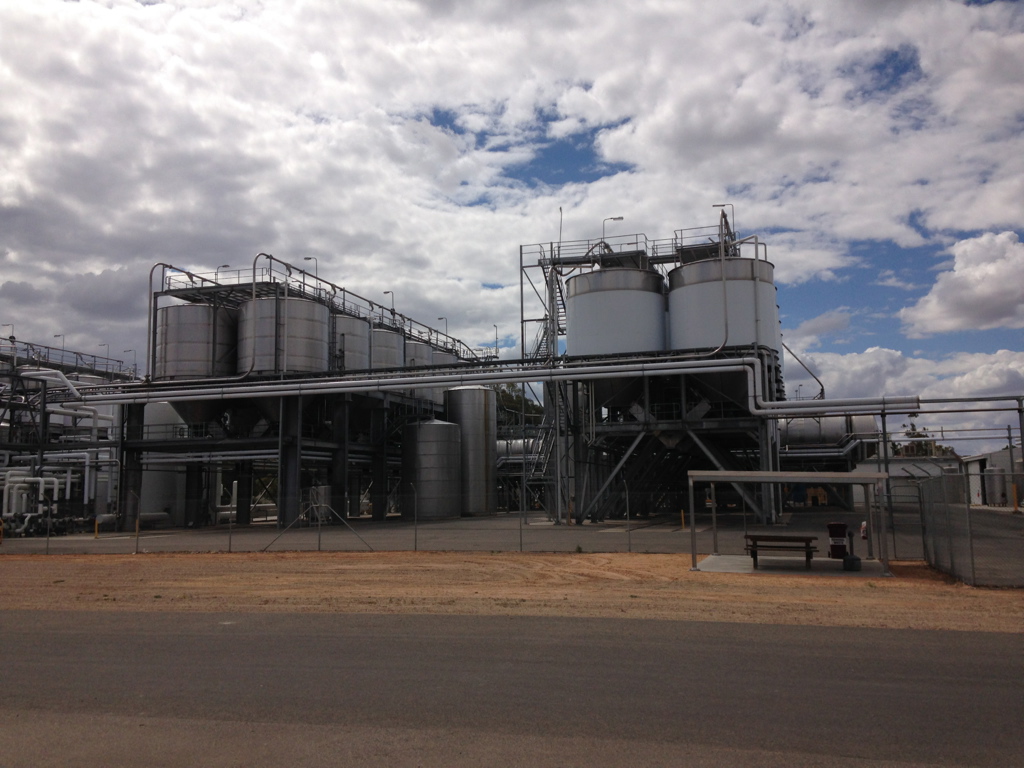
Closing the gap between Australia's current liquid-whey-to-feed model and the higher-value food-grade pathways seen globally requires investment in processing infrastructure. Membrane-separation technologies including ultrafiltration, microfiltration, nanofiltration, and reverse osmosis have transformed whey handling internationally, allowing processors to separate proteins by molecular weight and produce ingredients tailored to specific food applications. Spray-drying capacity is also essential for converting liquid whey concentrate into shelf-stable powder formats that can be transported economically across Australia's dispersed geography and into export markets.
GrainOut's role, as part of what Benzoil does, is to support this development by connecting whey producers with processors, ingredient buyers, and food manufacturers who have demand for whey-derived ingredients. For smaller dairy processors generating modest volumes of liquid whey, collaborative processing arrangements with third-party facilities can provide access to drying or filtration capacity without the capital commitment of building dedicated plant. GrainOut can assist in identifying these arrangements and structuring the commercial terms to make them work for all parties.
Key Takeaways
- Whey retains 45 to 55 percent of the nutritional content of whole milk and has significant anti-microbial, antiviral, and antioxidant properties.
- Australia produces around 1.65 million tonnes of liquid whey annually, the majority of which currently goes to animal feed rather than higher-value food-grade applications.
- Globally, around 50 percent of whey production is processed into human food ingredients; Australia has significant room to close this gap.
- Liquid whey suits direct animal feeding; powdered whey and WPC/isolate formats open food-grade pathways in sports nutrition, infant formula, bakery, and functional foods.
- GrainOut works with dairy processors to identify the right value-adding route for each whey stream, drawing on Benzoil's broader resource recovery capabilities and to connect supply with processing and end-use partners.
Frequently Asked Questions
What is whey and why is it considered a valuable by-product?
Whey is the liquid remaining after cheese or casein production and retains 45 to 55 percent of the nutrients in whole milk, including proteins, lactose, minerals, and vitamins. It also has anti-microbial, antiviral, and antioxidant properties, making it a high-value ingredient for animal feed, functional foods, and sports nutrition products.
How much liquid whey does Australia produce each year?
Australia produces approximately 1.65 million tonnes of liquid whey annually, predominantly as a by-product of cheese and casein manufacturing. The majority of this volume is currently directed to pig feed and calf milk replacer rather than higher-value food-grade applications.
What is the difference between whey protein concentrate and whey protein isolate?
Whey protein concentrate (WPC) typically contains 34 to 80 percent protein by weight and is produced through ultrafiltration or microfiltration. Whey protein isolate (WPI) achieves 90 percent protein or above by further removing residual lactose and fat, making it suitable for lactose-sensitive consumers and high-purity food and supplement applications.
Can liquid whey be applied directly to agricultural land in Australia?
Liquid whey can be used as a fertiliser but generates high biological oxygen demand (BOD), which can cause environmental issues including contamination of waterways and soil if applied in excess. State EPA frameworks apply to land application of whey, and producers should seek guidance on permitted application rates before using it as a soil amendment.
How can Australian dairy processors access higher-value whey markets?
Dairy processors can access higher-value whey markets by investing in spray-drying and membrane-filtration capacity to produce powdered whey protein, WPC, or WPI. For smaller processors, collaborative arrangements with third-party facilities can provide access to these processing pathways without the capital commitment of building dedicated plant. GrainOut can assist in identifying these arrangements.
Find Out How GrainOut Can Help You Extract Value from Whey
To discuss whey by-product collection, processing options, or commercial partnerships in Australia, reach out to the GrainOut team at Benzoil. Contact us here, call 0497 645 008, or email info@benzoil.com.au.


